
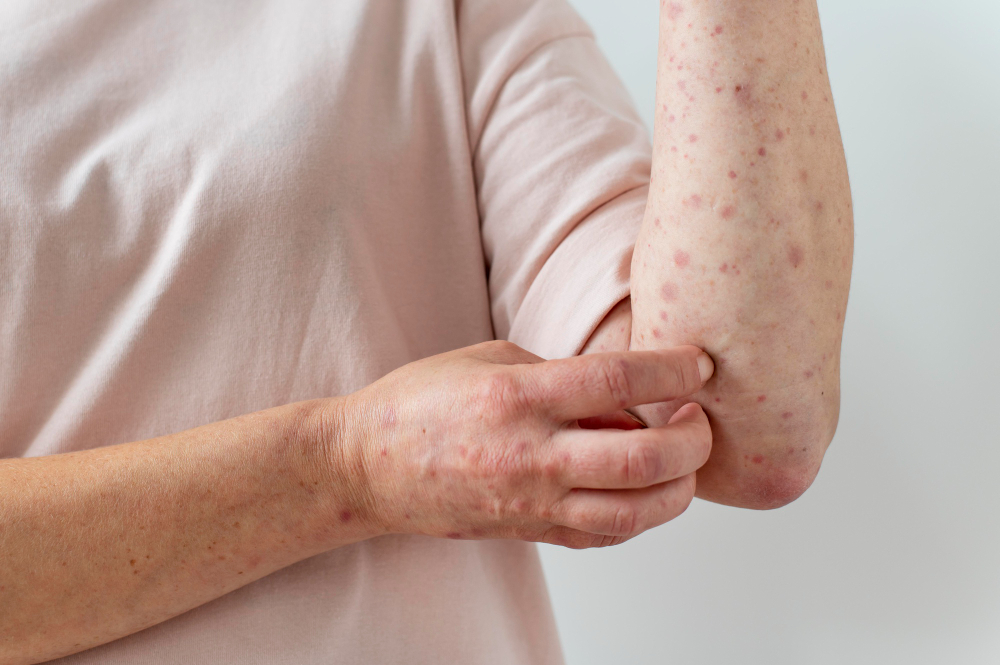
What Is Scabies?
Scabies is a skin condition caused by tiny mites called Sarcoptes scabiei. These mites burrow into the top layer of your skin. As a result, you may feel intense itching and see a rash. Scabies is common worldwide. In fact, it affects people of all ages and backgrounds. Although scabies is not dangerous, it can be very uncomfortable. This blog will explain how scabies spreads and why it often gets misdiagnosed.
How Scabies Spreads
Scabies spreads mainly through close skin-to-skin contact. For example, you can get scabies by hugging or holding hands with someone who has it. Sometimes, it spreads through shared bedding, towels, or clothing. However, quick contact, like a handshake, usually does not spread scabies.
Because the mites can live on items for a short time, it is important to wash clothes and bedding if someone in your home has scabies.
Common Symptoms of Scabies
Scabies symptoms can take two to six weeks to appear after first exposure. However, if you have had scabies before, symptoms may show up sooner. The most common signs include:
Usually, scabies affects the hands, wrists, elbows, armpits, waist, and between the fingers. But, it can appear anywhere on the body. In children, the face and scalp may also be involved.
Why Scabies Gets Misdiagnosed
Many people mistake scabies for other skin problems. For instance, eczema, allergic reactions, or insect bites can look similar. Because the rash and itching are not unique, doctors sometimes misdiagnose scabies. Also, the burrows may be hard to see. In some cases, people treat only the itching, not the cause. As a result, the mites remain and symptoms continue.
Therefore, it is important to tell your doctor about close contacts or if others around you have similar symptoms.
Diagnosis and When to See a Doctor
If you have ongoing itching or a rash that does not go away, you should see a doctor. A dermatologist can check your skin and may look for mites or eggs under a microscope. Sometimes, doctors diagnose scabies based on your symptoms and history. Early diagnosis helps prevent spreading scabies to others. If you have been in close contact with someone who has scabies, let your doctor know.
Prevention Tips
Preventing scabies is possible with a few simple steps. For example, you should:
Because scabies spreads easily, treating everyone in the household at the same time is often needed.
Conclusion
Scabies is a common skin problem that spreads through close contact. Although its symptoms are often mistaken for other conditions, proper diagnosis and treatment are important. If you suspect scabies, consult a dermatologist at ASHA SKIN CLINIC for proper diagnosis and treatment.