
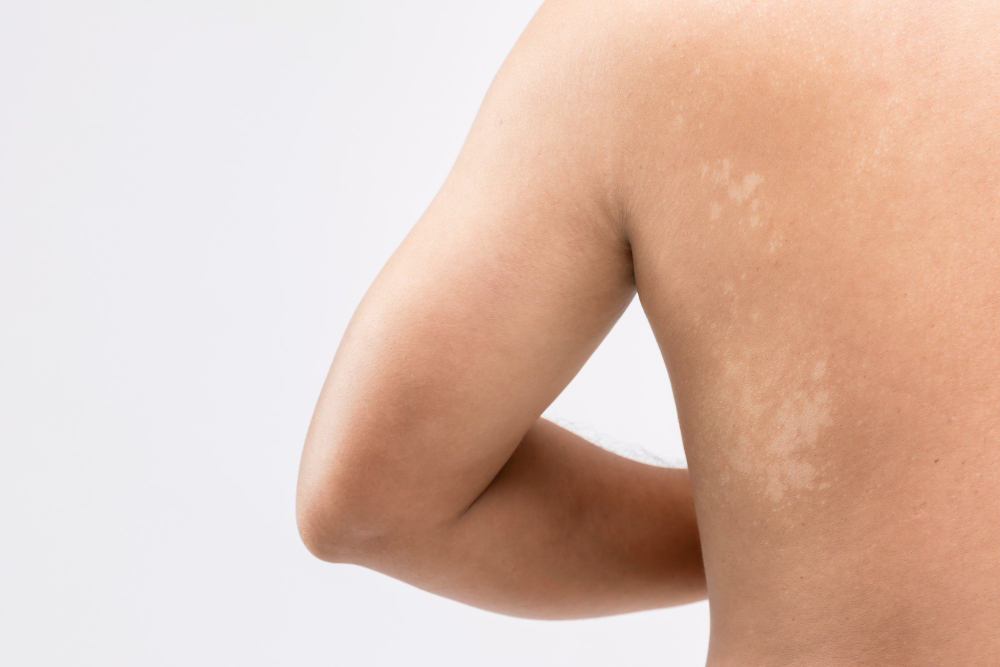
What is Tinea Versicolor?
Tinea Versicolor is a common skin condition. It causes white or dark patches on the skin. These patches often appear on the chest, back, neck, or arms. The condition is not dangerous, but it can affect how your skin looks. Tinea Versicolor happens when a type of yeast grows too much on your skin. This yeast is usually harmless. However, in some cases, it can lead to skin discoloration. According to the CDC, Tinea Versicolor is more common in warm and humid climates.
Symptoms of Tinea Versicolor
Many people notice changes in their skin color. Sometimes, the patches are lighter than the surrounding skin. Other times, they are darker. In addition, the patches may be dry or scaly. Below are common symptoms:
Often, these patches become more noticeable after sun exposure. But the condition does not cause pain or serious health problems.
Causes and Risk Factors
Tinea Versicolor is caused by a yeast called Malassezia. This yeast lives on everyone’s skin. However, certain factors can make it grow too much. As a result, skin discoloration appears. Here are some common risk factors:
Sometimes, family history can also play a role. But anyone can develop Tinea Versicolor.
How is Tinea Versicolor Diagnosed?
Doctors usually diagnose Tinea Versicolor by looking at your skin. Sometimes, they use a special light called a Wood’s lamp. This light can make the patches appear yellow-green. In some cases, your doctor may gently scrape the skin to look at it under a microscope. This helps confirm the diagnosis. According to dermatology experts, these simple tests are usually enough.
Treatment Options
Treating Tinea Versicolor is often simple. Most people use creams, lotions, or shampoos that fight yeast. These are called antifungal medicines. Some common treatments include:
Usually, treatment lasts for one to four weeks. However, skin color may take longer to return to normal. It is important to follow your doctor’s advice for best results.
Prevention and Lifestyle Tips
While Tinea Versicolor can come back, you can lower your risk. Here are some helpful tips:
Additionally, regular skin care can help prevent future outbreaks. But if patches return, early treatment works best.
When to See a Dermatologist
Sometimes, home treatments may not work. In that case, you should see a dermatologist. You should also seek help if:
Dermatologists can offer stronger medicines or advice. They can also check for other skin problems if needed.
In summary, Tinea Versicolor is a common cause of white or dark patches on skin. With proper care, most people manage it well. Consult a dermatologist at ASHA SKIN CLINIC for personalized advice and treatment options.