
Introduction
Scabies is a skin condition caused by tiny mites called Sarcoptes scabiei. These mites burrow into the skin and cause intense itching. Because scabies can look like other skin problems, it is often misdiagnosed. In this blog, you will learn how scabies spreads, why it is often mistaken for other conditions, and how to spot it early. Understanding these facts can help you protect yourself and your family.
What Is Scabies?
Scabies is an itchy skin rash caused by a mite that lives on humans. The mite is so small that you cannot see it without a microscope. Once it gets under the skin, it lays eggs and causes a rash. Although anyone can get scabies, it spreads more easily in crowded places. For example, schools, nursing homes, and shelters are common sites. According to the Centers for Disease Control and Prevention (CDC), scabies affects millions of people worldwide each year.
How Does Scabies Spread?
Scabies spreads mainly through close skin-to-skin contact. For instance, hugging or holding hands with someone who has scabies can pass the mites. However, it usually takes several minutes of contact for the mites to move from one person to another. Scabies can also spread by sharing bedding, towels, or clothing, but this is less common. Because the mites cannot jump or fly, quick contact like a handshake rarely spreads scabies. In families or group settings, one person with scabies can easily infect others.
Common Symptoms of Scabies
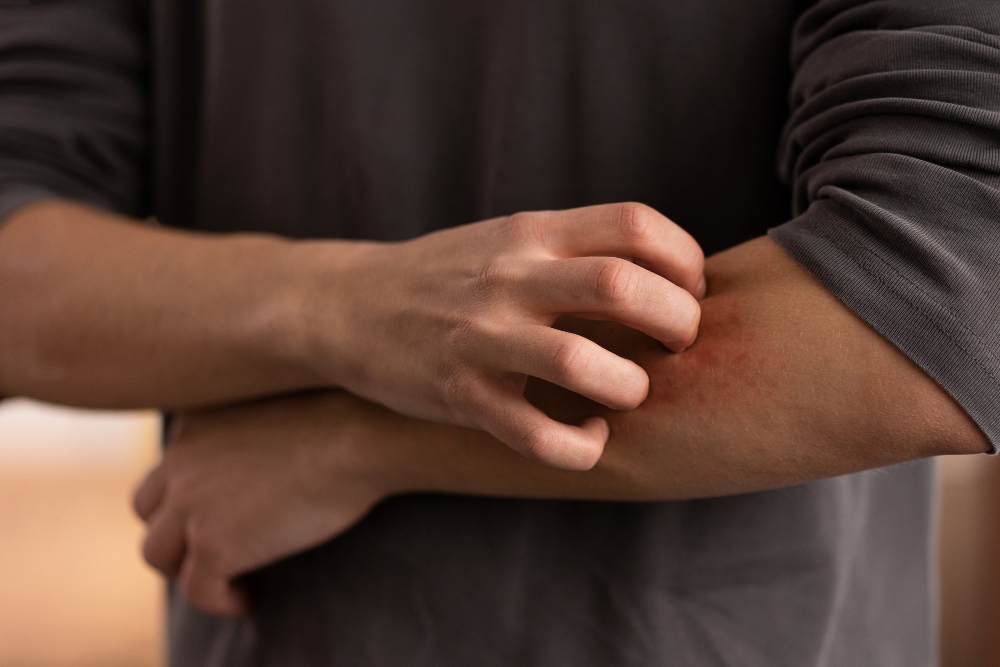
Scabies causes a very itchy rash. The itching often gets worse at night. Small red bumps or blisters may appear on the skin. Sometimes, thin lines called burrows can be seen where the mites have tunneled. These signs often show up between the fingers, on the wrists, elbows, waist, or around the genitals. However, the rash can appear anywhere on the body. Because scratching is common, the skin may become sore or infected.
Why Is Scabies Often Misdiagnosed?
Scabies is often misdiagnosed because its symptoms look like other skin problems. For example, eczema, allergic reactions, or insect bites can cause similar rashes and itching. Sometimes, doctors may not see the burrows or mites during an exam. In addition, the rash can appear in different ways on different people. Because of these reasons, scabies may be mistaken for other conditions. This can lead to delays in proper treatment.
Tips for Accurate Diagnosis
Getting the right diagnosis is important for treating scabies. If you have a rash that does not go away or gets worse, see a doctor. For best results, tell your doctor about any close contact with someone who has scabies. Sometimes, doctors may scrape the skin to look for mites under a microscope. Although this test is not always needed, it can help confirm the diagnosis. Early diagnosis can prevent scabies from spreading to others.
Prevention and When to See a Doctor
To prevent scabies, avoid close contact with people who have it. In addition, do not share bedding, towels, or clothing with others. If someone in your home has scabies, wash all clothes and linens in hot water. Dry them on a hot setting. Although scabies is not dangerous, it can cause discomfort and spread quickly. Therefore, see a doctor if you or someone in your family has symptoms. Early treatment can help stop the spread and ease itching.
If you think you may have scabies, consult Dermatologist at Asha skin clinic for a proper diagnosis and treatment. Early care can help you feel better and protect others.